

I’d like to point out the differences between a cold and a flu. And tell you a shocking statistic….
The CDC ESTIMATED last year’s flu shot / flu vaccine was only 40% effective (and with that it was 49% effective in Influenza B (mildest form), 25% against H3N2 (most common strain found circulating last year) and 65% against H1N1).
Who knows what the effectiveness will be this year…the CDC even says “flu vaccine can vary in how well it works….”
Guys, I’m not making this up….you can find it on the CDC website.
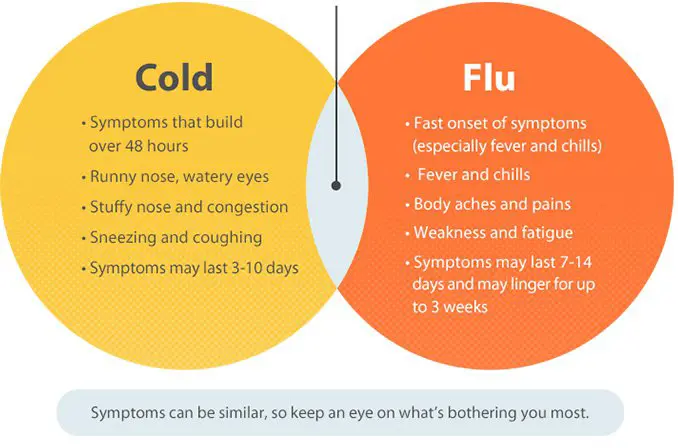
Symptoms of a Cold
Cold symptoms build over 48 hours. Here is what to look for:
- Runny nose, watery eyes
- Stuffy nose and congestion
- Sneezing and coughing
- Symptoms may last 3-10 days
Symptoms of the Flu
The flu has a fast onset of symptoms (especially fever and chills):
- Fever and chills
- Body aches and pains
- Weekness and fatigue
- Symptoms may last 7-14 days and may linger for up to 3 weeks
How To Tell The Difference Between A Cold Vs The Flu
So….how do you know if you have the common cold or the flu?
- Suddenly sick-symptoms come on abruptly? Most likely the flu. Probably the most distinguishing characteristic.
- Fever? Most likely the flu, but sometimes the flu can present without a fever.
- Chills? Most likely the flu.
- Headache? Most likely the flu.
- Sneezing? Most likely a cold, although you can sneeze with the flu.
- Sore throat? Most likely a cold, although you can have a sore throat with the flu.
- Chest discomfort/cough? Most likely the flu. You may have a mild to moderate hacking cough with the cold.
- Fatigue? Usually happens with both.
What Should You Do If You Think You Have the Flu?
If your symptoms seem more consistent with the flu than a common cold, the next step is deciding how you want to manage it.
Many people immediately wonder whether they should take an antiviral medication like Tamiflu, which is often prescribed to shorten the duration of flu symptoms when taken early.
However, there are important factors to consider, including how effective it is, who it’s recommended for, and potential side effects. If you’re trying to decide whether this medication is right for you, you can learn more in our article on whether you should take Tamiflu if you get the flu.
Another common question people have during flu season is whether getting the flu shot is the best way to protect themselves and their families. Understanding what's in the flu vaccine and how it works can help you make an informed decision about whether you should get the flu shot or not.
Staying Healthy - Naturally
While understanding the different symptoms means you can make informed decisions about your health, many people are also interested in learning how they can support their immune system naturally during flu season.
Simple lifestyle habits - such as proper nutrition, adequate sleep, stress management, and targeted immune support- can play an important role in helping your body stay resilient during the colder months. If you’d like to learn practical ways to strengthen your immune defenses, you can read more in our article on how to stay healthy during flu season.