
The influenza virus was first isolated 80 years ago in 1933. The first vaccine was a monovalent (one) live-attenuated which was still used in Russia until recently.
Types of Influenza Viruses
There are 4 types of influenza viruses: A, B, C, D.
- Type A & B can cause seasonal epidemics every winter in the U.S.
- Type C can cause mild respiratory illness and is not thought to cause epidemics.
- Type D primarily affects cattle and not humans.
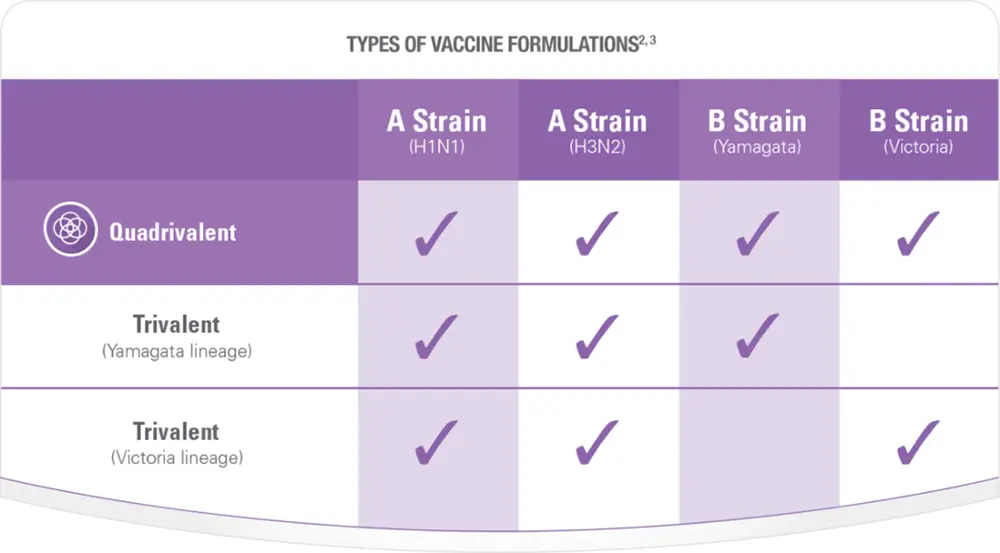
What Influenza Viruses Are IN The Flu Shot?
Here are what influenza viruses are in the vaccine in 2018.
Type A
Type A is divided into subtypes based on 2 proteins on the surface of the virus called hemagglutinin (H) and neuraminidase (N). There are 18 different H subtypes and 11 different N subtypes. The current subtypes found in people are H1N1 and H3N2.
Type B
Type B is broken down into lineages and strains. Currently circulating B viruses belong to either B/Yamagata and B/Victoria.
But…what else is in this vaccine?
What Ingredients Are In The Flu Shot?
Let's dive deeper into the rest of what’s in the flu shot.
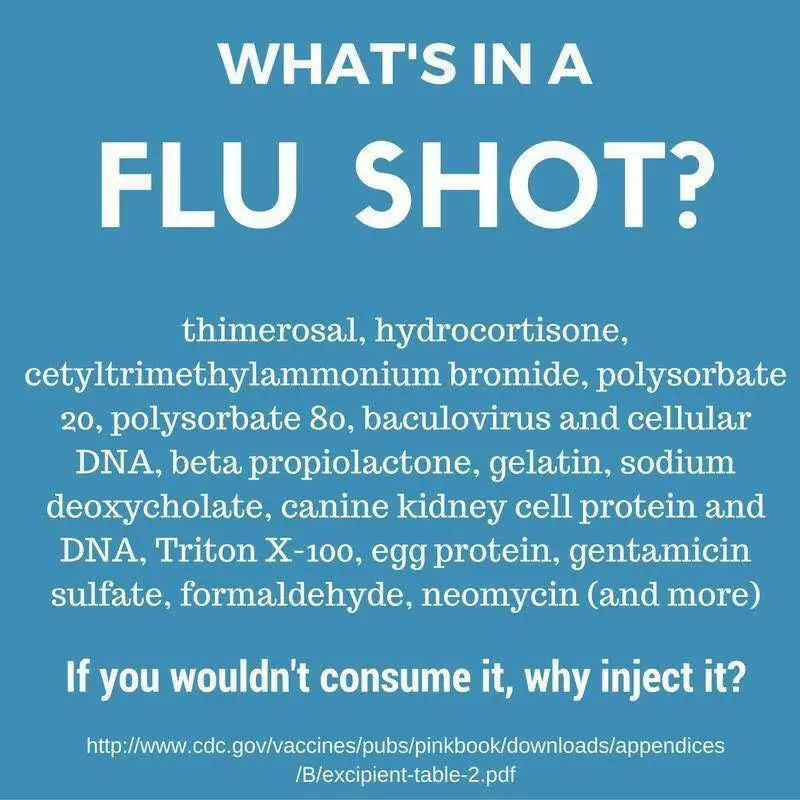
Thimerosal (aka Mercury)
There are plenty of studies out there showing that mercury at ANY level is toxic to humans, but did you know that there is 25,000ppb (25mcg) of mercury being injected into you with each flu shot?? 2ppb is the limit for drinking water!! In 2001, the EPA concluded that pregnant woman could consume 0.1mcg of mercury per kg of body weight daily without any ill effects to fetus. So for a 140 pound person that’s 6.5mcg of mercury….the shot has 25mcg.
Formaldehyde
The EPA has classified this as a carcinogen and there are several studies that it has been linked to certain types of cancer.
Aluminum
Although a tiny amount is found in the vaccine, but there has been evidence that aluminum can contribute to brain and bone disease.
MSG
Used as a preservative and stabilizer in the vaccine. MSG has always had a bad rep. Enough said.
Egg Protien
Most flu vaccines nowadays are produced using egg-based technology which requires the CVV (candidate vaccine virus) to be grown in chicken eggs and then incubated for several days to a slow the viruses to replicate. Then, the virus is inactivated (killed) and the virus antigen is purified. So, if you have an egg allergy is the vaccine OK? Jury is out, but CDC claims you are OK.
Making Informed Decisions About Your Health
Understanding what goes into any medical treatment or vaccine is an important part of being an informed healthcare consumer. The influenza vaccine has evolved over the decades, and today’s formulations include multiple viral strains along with various ingredients used to stabilize or preserve the vaccine.
Health decisions are rarely one-size-fits-all. Factors such as age, health history, allergies, immune system status, and lifestyle may all influence how someone approaches seasonal illnesses and prevention strategies.
If you’re considering the flu shot or have questions about immune health, it’s always helpful to speak with a qualified healthcare provider.
Need more information? The CDC.gov has everything you need to know about what you are injecting into your body and/or your child. The CDC is also recommending TWO doses of the flu vaccine for children 6 months -8 years old this year. Ay yi yi.