

Brain fog and word-finding difficulty in perimenopause are driven by estradiol fluctuation, not a smooth decline, but erratic swings that disrupt the brain's access to language and memory. Thyroid function plays a role too, and is rarely tested thoroughly enough to catch early changes. Both are findable. Neither is "just stress."
You're in the middle of a sentence and the word is just gone.
Not forgotten, exactly. You can feel the shape of it, sense what it means, and still you're standing there in a conversation, in a meeting, mid-thought, waiting for it to come back while your face does something you hope looks normal.
If you've been told this is stress, or aging, or something you should probably just accept, I want to give you a more accurate explanation. Because what's actually happening in your brain has a clinical reason. And clinical reasons are findable.
What Estradiol Has to Do With Your Words

Estradiol, the primary form of estrogen your ovaries produce, is not just a reproductive hormone. It directly supports blood flow to the prefrontal cortex, the region of the brain responsible for word retrieval, working memory, and cognitive flexibility. Research published in Frontiers in Aging Neuroscience found that decreased estradiol is associated with significant reductions in both word recall and verbal fluency in women, two of the functions women most commonly report losing in perimenopause.
Estrogen also influences the hippocampus and parahippocampal gyrus, areas involved in memory consolidation and retrieval. When estradiol support drops or fluctuates, those brain regions lose a key metabolic input they've relied on for decades.
The problem isn't just that estradiol is declining. It's that in perimenopause, it's erratic.
This is the part most women aren't told: perimenopause is not a smooth, predictable decline in hormones. It's characterized by unpredictable fluctuation. Estradiol can spike and crash within the same week, sometimes within the same day. Research out of the University of North Carolina has been studying how this variability specifically drives mood, cognitive, and neurological symptoms, independent of whether levels are "low" by conventional standards.
So when a woman says she felt fine last Tuesday and can't string a sentence together today, that inconsistency isn't in her head. It's a reflection of what her hormones are actually doing.
The Thyroid Piece That Usually Gets Missed
Estradiol is not the only driver here.
Thyroid hormone is involved in nearly every metabolic process in the body, including brain metabolism, and when thyroid function slows, even subtly, cognitive symptoms appear early.
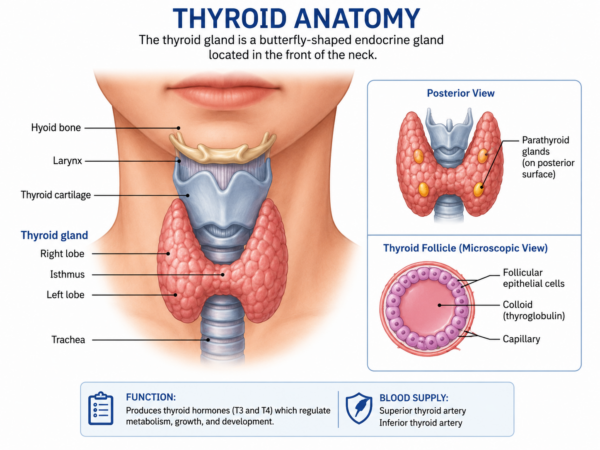
The issue is that standard thyroid testing often misses early changes in function. A TSH within conventional "normal" range does not tell you what the brain is actually receiving from thyroid hormone. Free T3, the active form that crosses into tissues and supports cellular energy, can be low while TSH sits in range. Ferritin, which is essential for thyroid hormone conversion, is rarely checked at all.
"When a woman comes in describing this exact symptom, losing words mid-sentence, feeling like her vocabulary has partially disappeared, I'm not thinking stress. I'm thinking: has anyone looked at her free T3, her ferritin, her estradiol variability? Usually the answer is no."
A 2025 study from the CAN-PROTECT research platform found that brain fog and cognitive symptoms during perimenopause were significantly associated with poorer cognitive scores later in life, which gives clinical urgency to taking these symptoms seriously rather than normalizing them.
They are not normal. They are data.
Why "Your Labs Are Normal" Doesn't Settle This
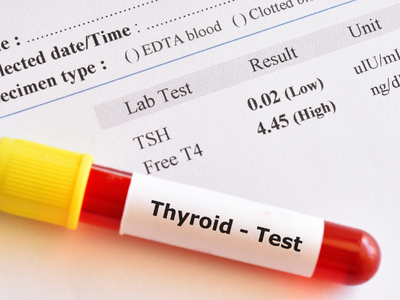
Standard lab work is built on population reference ranges, which are designed to identify disease, not to capture the gap between disease-free and functioning well. A TSH of 3.8 is technically within range. For a woman in her 40s describing cognitive symptoms, it is not a reassuring result. It's a starting point.
The same applies to estradiol. A single serum estradiol drawn at one point in time tells you almost nothing about how her hormones are actually behaving across a cycle. Perimenopause requires a more complete picture: how hormones are moving, what's driving the fluctuation, what's downstream.
Not because something catastrophic is happening, but because the standard panel isn't asking the right questions.
What a More Complete Workup Actually Looks At

When I'm evaluating cognitive symptoms in a perimenopausal patient, the panel I want to see goes beyond a basic hormone screen. It typically includes:
- Free T3 and reverse T3: not just TSH, because TSH doesn't tell you what the brain is receiving
- Ferritin: low ferritin impairs thyroid hormone conversion and independently drives fatigue and cognitive symptoms; optimal is above 50, not just above the lab's lower cutoff
- Estradiol, progesterone, and FSH: ideally timed to the cycle, not drawn randomly
- Fasting glucose and insulin: blood sugar instability directly affects cognitive clarity and energy between meals
- Vitamin B12: neurological symptoms including word-finding difficulty are among the first signs of B12 insufficiency, and insufficiency can occur well within "normal" range
This is not an exhaustive list. It is a starting point for building a picture rather than ruling out catastrophe.
The goal is to find what's actually driving the symptom, not to confirm that nothing severe is wrong.
The same applies to estradiol. A single serum estradiol drawn at one point in time tells you almost nothing about how her hormones are actually behaving across a cycle. Perimenopause requires a more complete picture: how hormones are moving, what's driving the fluctuation, what's downstream.
Not because something catastrophic is happening, but because the standard panel isn't asking the right questions.
When to Look More Closely
If you are experiencing brain fog or word-finding difficulty in perimenopause, and you have been told your labs are normal, it may be worth asking more specific questions about what was actually tested and what values are considered acceptable.
Some questions worth bringing to your next appointment:
- Was my free T3 tested, or just TSH?
- What is my ferritin level? And is that considered optimal, or just not deficient?
- Was my estradiol drawn at a specific point in my cycle?
- Has anyone looked at my fasting insulin alongside glucose?
You are not looking for a diagnosis. You are looking for a complete picture. Those are different things, and knowing the difference is what makes the next conversation more useful.
FAQ
Why do I lose words mid-sentence during perimenopause?
Word-finding difficulty in perimenopause is primarily driven by estradiol fluctuation. Estradiol supports blood flow to the prefrontal cortex and influences the brain regions responsible for language and memory. When it swings unpredictably, access to those functions becomes inconsistent. Thyroid insufficiency and low ferritin can compound the problem significantly.
Is perimenopause brain fog permanent?
No. For most women, cognitive symptoms during perimenopause reflect a temporary disruption in the neurological environment, not permanent damage. The SWAN study found that verbal memory difficulties were most pronounced during perimenopause itself and improved after the transition. Identifying and addressing the underlying drivers accelerates recovery.
Can thyroid problems cause word-finding difficulty in women?
Yes. Thyroid hormone supports brain metabolism, and even subtle insufficiency can produce cognitive symptoms including difficulty retrieving words. These symptoms can appear before TSH moves outside of a conventional normal range, which is why testing free T3 and ferritin alongside TSH gives a more complete picture.
Why do my labs look normal but I still feel off cognitively?
Standard lab panels are designed to identify disease, not to capture early or functional changes. A TSH within range does not tell you whether your brain is receiving adequate thyroid hormone. A single estradiol draw doesn't reflect how your hormones are moving across a cycle. Normal on paper can coexist with meaningful physiological changes that explain your symptoms.
What tests should I ask for if I have brain fog in perimenopause?
A useful starting point includes free T3, ferritin, fasting insulin and glucose, vitamin B12, and timed estradiol and progesterone. These go beyond what a standard panel typically includes, and each one has a direct connection to cognitive function.
How do I know if my brain fog is perimenopause or something else?
Perimenopause-related brain fog tends to be inconsistent, better some days and worse others, and is often accompanied by other hormonal symptoms like irregular cycles, sleep disruption, mood changes, or fatigue. A clinician who looks at the full picture is better positioned to differentiate between causes than one who rules out disease and stops there.
Take a Closer Look at What's Behind Your Fatigue and Brain Fog
The Why Am I So Tired Assessment is a short, targeted assessment designed to connect your symptoms to the hormone and metabolic patterns most likely driving them. It won't replace a full clinical workup, but it will give you a clearer picture of what to look at next, and what questions to ask.

Dr. Erin Ellis, ND
Dr. Erin Ellis, ND, is the founder of Hope Natural Health and a licensed Naturopathic Doctor with more than nine years of clinical experience specializing in women's hormone health. After overcoming cancer, Dr. Ellis made it her life's mission to help women find the root cause of why they don't feel like themselves. She believes "normal" lab results are only the beginning of the conversation - not the end - and is known for taking a deeper, investigative approach to hormone, thyroid, gut, and metabolic health.